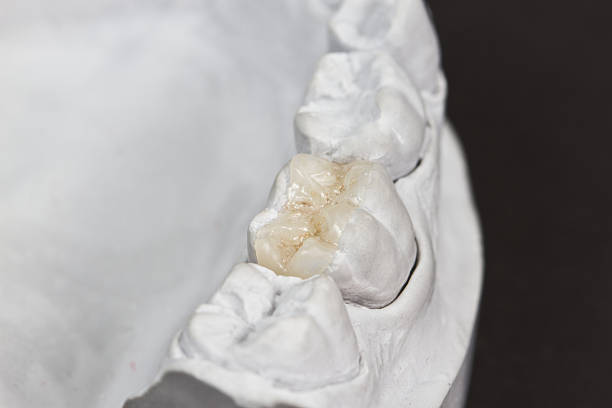
Dental inlays and onlays may be recommended when a tooth needs more repair than conventional dental fillings can predictably provide, but enough healthy structure remains that full dental crowns may not be necessary. At The Woodlands Dental Group, we help patients understand these options as part of restorative dentistry in The Woodlands, TX, with treatment decisions based on the condition of the individual tooth.
An inlay fits within the prepared area between a tooth’s cusps, the raised portions of its chewing surface. An onlay extends over one or more cusps when those areas need rebuilding or protection. Both are custom restorations designed to replace specific areas of missing or damaged tooth structure.
Choosing between them involves more than measuring a cavity. Your dentist considers where the damage is located, how much sound tooth remains, whether cracks are present, and how the tooth meets the opposing teeth. Understanding these factors can help you feel more comfortable discussing the recommendation and what it means for your care.
What Are Dental Inlays and Onlays, and How Do They Restore Damaged Teeth?
Inlays and onlays are indirect restorations. This means they are fabricated separately from the tooth and then fitted and secured with an appropriate bonding or cementing technique. Their shape is based on a record of the prepared tooth, allowing the restoration to replace the particular area that needs repair.
Although patients sometimes hear them described as a treatment “between a filling and a crown,” that description is only a starting point. The important differences involve which parts of the tooth are restored and what support the remaining tooth needs.
What Is a Dental Inlay?
A dental inlay restores a prepared cavity or damaged area within the cusps, usually on a back tooth. Its boundaries stay within those raised chewing surfaces rather than extending over them. A tooth inlay may replace damaged structure in the center of the tooth and, depending on the defect, extend toward the area where that tooth meets its neighbor.
The finished inlay restoration recreates the contours of the missing portion. Its grooves and slopes should work with the remaining natural chewing surface, and its edges should fit against the prepared tooth. Healthy surrounding structure remains part of the restored tooth’s function.
An inlay does not cover a weakened cusp simply because it occupies a large area. If a cusp also requires protection, the dentist considers a restoration design that includes that coverage.
What Is a Dental Onlay?
A dental onlay replaces damaged tooth structure and covers one or more cusps. A cusp is a raised part of a back tooth’s chewing surface that helps crush and grind food. These raised portions also meet the opposing teeth during chewing.
When a cusp is fractured, missing, or insufficiently supported, a tooth onlay may rebuild that portion and cover selected remaining areas. This is called cusp coverage. The number of cusps included depends on the tooth’s condition, rather than a standard design used for every patient.
Your dentist can explain which cusps need coverage and which areas can remain uncovered. That explanation is often more useful than focusing on the name of the restoration alone.
How Are Inlays and Onlays Different From Traditional Fillings?
A conventional direct filling is placed and shaped inside the mouth. For example, composite resin is applied to the prepared tooth, sculpted, and hardened with a curing light. The dentist then finishes the restoration and checks the bite.
An indirect restoration is made separately before it is attached to the tooth. Inlays and onlays follow this approach, using an impression or scan to guide fabrication. The dentist checks the finished piece before bonding or cementing it into place.
Neither method is automatically stronger or longer-lasting in every situation. Direct fillings remain appropriate for many teeth. An indirect restoration becomes useful when its design, material, and fit address needs that are less suitably managed with a conventional filling.
Why Are Inlays and Onlays Sometimes Called Partial-Coverage Restorations?
These restorations replace selected portions of a tooth instead of necessarily covering its entire visible crown. The term “partial coverage” is particularly helpful when explaining how an onlay differs from a full dental crown.
A full crown covers the prepared tooth around its sides and across its chewing or biting surface. An onlay covers the areas included in its design while leaving other suitable surfaces uncovered. An inlay stays within the cusps.
Partial coverage can preserve suitable remaining structure, but the amount of preparation varies. A conservative treatment plan must also provide enough support and appropriate space for the selected material.
When Does a Dentist Recommend a Dental Inlay or Onlay?
A dentist may consider an inlay or onlay when the pattern of tooth damage supports a custom, indirect restoration. The decision includes the tooth’s structural condition, the health of its inner tissues, and whether the restoration can be fitted and maintained predictably.
Two teeth with similarly sized cavities may need different treatments. One may have strong surrounding walls, while the other has a fractured cusp or a crack that changes the plan. Your dentist’s examination helps identify those differences.
When a Cavity Is Too Large for a Conventional Filling
A larger cavity can leave less healthy tooth available to support a restoration. Its position also matters: damage confined between supported cusps presents a different problem from decay that undermines a cusp or removes a substantial side wall.
There is no universal cavity-size cutoff that makes an inlay or onlay necessary. Your dentist considers the thickness and support of the remaining walls, the surfaces involved, and whether a direct restoration can be placed effectively. An inlay may suit a selected defect within the cusps; an onlay may be considered when cusp coverage is needed.
If you are told a cavity is “too large for a filling,” ask which parts of the tooth need additional protection. That gives the recommendation a concrete explanation.
When One or More Tooth Cusps Need to Be Rebuilt
A weakened, fractured, or missing cusp can change how a tooth handles chewing forces. Filling the central opening alone may not address damage to the raised portion that contacts the opposing tooth.
An onlay can include that cusp in the restoration, rebuilding its shape and providing coverage where the dentist considers it necessary. The design must account for the supporting tooth underneath and the way forces pass through the restored surface.
This is why a missing corner of a back tooth may call for a different approach than a small cavity in a groove. The repair needs to suit the anatomy that has been lost.
When a Large Existing Filling Needs Replacement
A large filling may need attention because of recurrent decay, a fracture, or damage to the surrounding tooth. When considering replacing a large old filling with an onlay, your dentist evaluates the remaining structure and whether cusps need coverage. Sometimes the full extent of damage becomes clearer only after the old material is removed. The age of a filling alone does not establish that it needs replacement; ask what findings support replacing it and how those findings affect the proposed restoration.
When a Tooth Has a Crack or Fractured Portion
Some teeth with a fractured cusp or a limited crack may be candidates for a cusp-covering restoration. The dentist evaluates the crack’s location and extent, symptoms, and whether the pulp or root is involved before recommending treatment.
An onlay cannot treat every cracked tooth. A deeper crack may require a crown, root canal treatment, or another approach, and some fractures make a tooth impossible to restore predictably. Covering a crack also does not make the fracture heal like a broken bone.
Pain when biting or releasing pressure, or sensitivity to temperature, deserves evaluation. Describe when the discomfort occurs, even if it comes and goes. Those details help the dentist investigate the source.
When Enough Healthy Tooth Structure Remains to Avoid Full-Coverage Treatment
Partial coverage may be appropriate when the remaining tooth can support the restoration and the areas needing protection can be addressed without a full crown. Preserving suitable tooth structure is one consideration in that decision.
The dentist also needs to assess whether the proposed design offers adequate function and a dependable attachment. Saving a small amount of tooth would provide little benefit if the resulting restoration could not work reliably.
A full crown is sometimes the appropriate way to protect a compromised tooth. You should feel welcome to ask why partial coverage is suitable, or why more extensive coverage is recommended for your situation.
Dental Inlay vs. Onlay vs. Filling vs. Crown: How Do Dentists Choose?
These treatments differ in their coverage and the clinical problems they address. The comparison below provides a general guide, rather than a way to diagnose a tooth at home.
| Restoration | General Coverage | Common Treatment Context |
|---|---|---|
| Filling | Replaces a localized area of missing tooth structure | Smaller to moderate defects where direct restoration is appropriate |
| Inlay | Fits within the tooth’s cusps | Selected defects within the tooth where an indirect restoration is appropriate |
| Onlay | Covers one or more cusps as part of the repair | Defects involving weakened, fractured, or missing cusps |
| Crown | Covers the prepared clinical crown | Teeth needing more extensive coverage or protection |
The clinical crown is the part of the tooth visible above the gumline. A restoration’s coverage describes its shape; it does not establish that it is the best treatment for every tooth with a similar appearance.
When Is a Filling Enough?
A filling may be enough when the defect can be restored directly and the remaining tooth has suitable support. Small cavities often fall into this category, as do some moderate defects.
Your dentist considers whether the area can be accessed, kept appropriately isolated from moisture, and shaped to restore the tooth’s contours. Where decay involves the contact between teeth, that contact also needs to be recreated appropriately.
For suitable cavities, tooth-colored dental fillings can restore the damaged area without a separately fabricated restoration. Choosing a filling in this situation is a considered treatment decision, rather than a lesser version of an inlay or onlay.
When Does an Inlay Offer a Suitable Alternative?
An inlay may be considered for a selected defect that stays within the cusps when an indirect restoration is appropriate. The surrounding cusps must be evaluated to determine whether they can remain uncovered.
The dentist considers the prepared area, the material requirements, and the ability to obtain a sound fit and attachment. A patient’s preference for a particular material can be part of the conversation, but the tooth must also be a suitable candidate.
Ask what the inlay would accomplish in your tooth compared with a direct filling. The answer should relate to the specific restoration being planned.
When Is an Onlay Preferred Over a Filling?
An onlay may be preferred when the tooth needs coverage over one or more cusps as well as replacement of missing structure. That can be relevant when a large defect leaves a cusp thin, fractured, or unsupported.
The planned restoration should rebuild the damaged area and fit the way the tooth functions against its opposing teeth. The dentist also considers whether enough suitable tooth remains to support and retain that design.
An onlay is therefore selected for a particular structural need. It is not an automatic upgrade for every large filling or a requirement whenever a patient wants a tooth-colored repair.
When Might a Full Dental Crown Be Necessary Instead?
A crown may be necessary when damage is extensive, several surfaces need protection, or the remaining tooth cannot adequately support partial coverage. Certain crack patterns and the condition of a tooth after root canal treatment may also influence the decision.
If you are exploring dental crowns in The Woodlands, TX, ask your dentist to show you the areas that need coverage. Understanding the structural reason for the recommendation can make the choice easier to follow.
The aim is to select appropriate protection for the tooth you have now. A crown and an onlay serve different needs, and neither is universally the more conservative or more effective answer.
Which Teeth Can Be Restored With Dental Inlays and Onlays?
Inlays and onlays are most commonly associated with posterior teeth: the premolars and molars toward the back of the mouth. These teeth have chewing surfaces with cusps and grooves, making the distinction between a restoration within the cusps and one covering them especially useful.
Tooth location matters, but it is only part of the assessment. A back tooth still needs enough suitable structure and an appropriate restoration design to be a candidate.
Why Molars Often Need Strong Chewing-Surface Restorations
Molars have broad chewing surfaces with multiple cusps that help crush and grind food. A restoration on a molar must work within that anatomy and withstand the forces placed on it during function.
Decay or an old restoration may affect the grooves between cusps, the side of the tooth, or the cusps themselves. These different patterns help explain why one molar can be treated with a filling while another needs cusp coverage.
Your dentist assesses the remaining support and where the opposing teeth contact the molar. The finished surface should restore useful chewing anatomy without creating an interfering contact.
How Onlays Can Restore Damaged Premolars
Premolars sit between the canine teeth and molars and help tear and crush food. Their cusps can also be weakened by decay, a fracture, or a large existing restoration.
An onlay may restore a damaged premolar when selected cusps need coverage and the remaining tooth is suitable. The dentist plans the repair around the tooth’s particular shape and the forces it receives.
A premolar is not automatically an easier candidate because it is smaller than a molar. Both require an assessment of structural support and the available space for the restoration.
Are Inlays and Onlays Used on Front Teeth?
Traditional inlay and onlay terminology most commonly applies to back teeth. Front teeth have different biting anatomy, so dentists generally consider other restoration designs for them.
Depending on the damage, those choices may include direct bonding, a filling, or a crown. Veneers may be appropriate for selected aesthetic concerns, but they serve a different purpose from repairing every type of structural problem.
If a front tooth is chipped or damaged, an examination can establish which areas need repair. Inlays and onlays should not be understood as routine front-tooth cosmetic treatments.
What Materials Are Used for Dental Inlays and Onlays?
Inlays and onlays can be made from ceramic materials, indirect composite resin, or selected metal alloys. Each material has different physical properties and preparation requirements.
The options discussed here describe materials used in dentistry generally. Your dentist can explain which are offered and appropriate for your tooth, rather than assuming that every material is available for every treatment.
Ceramic and Porcelain Inlays and Onlays
Ceramic restorations provide a tooth-colored option that can be selected to blend with neighboring teeth. Porcelain is one type of dental ceramic; the terms are often used together in patient discussions, although ceramic materials are not all identical.
These restorations are fabricated to replace the prepared area, with material selection influencing the required thickness and attachment technique. Their appearance can be an advantage when the tooth is visible as you speak or smile.
Ceramics can chip or fracture, and adequate support and an appropriate bite remain important. A natural-looking material still needs to meet the functional requirements of the tooth being restored.
Composite Resin Inlays and Onlays
Indirect composite restorations are made from dental resin-based materials outside the mouth before placement. Although composite resin is also used for direct fillings, the fabrication and placement process is different.
The material is formed into a separate restoration rather than being built entirely inside the prepared tooth. Your dentist evaluates whether its properties and design suit the defect and the forces involved.
Material names alone do not establish how a restoration will perform. Ask how the proposed indirect composite option compares with the other suitable choices for your tooth.
Gold and Other Metal Restorations
Gold-alloy inlays and onlays have a long history in restorative dentistry. These are dental alloys containing gold with other metals, rather than pieces of pure gold.
Metal restorations may be considered for their functional properties, but their visible color can be a concern for some patients. Cost, material sensitivities, and clinical requirements also belong in the discussion.
If you have a known metal allergy or a previous reaction to dental materials, tell your dentist before treatment planning. The appropriate option should reflect both your dental needs and relevant health information.
How Dentists Choose a Material Based on Tooth Location and Bite Forces
The dentist considers how much space is available and how thick the selected material needs to be. The design must also account for chewing forces, the support provided by the remaining tooth, and how the restoration will be attached.
Appearance may carry more weight for a visible premolar than for a tooth far back in the mouth. Grinding or clenching can change the discussion because repeated loading may affect both natural teeth and restorations.
These factors work together. A material with desirable strength or appearance still needs an appropriate design, sufficient space, and a suitable tooth beneath it.
What Happens During a Dental Inlay or Onlay Appointment in The Woodlands, TX?
Treatment generally includes examining the tooth, preparing it, recording its shape, and fitting the custom restoration. The number and length of appointments depend on the fabrication method and whether other care is needed first.
Your dentist should explain the anticipated schedule before treatment begins. Local anesthetic is commonly used during preparation to help you stay comfortable. Let the team know about dental anxiety, previous difficulty getting numb, or concerns about the procedure so these can be discussed in advance.
Step 1 — Examining the Tooth and Assessing the Damage
The process starts with a comprehensive dental examination. Your dentist evaluates the affected tooth, existing restorations, surrounding gums, and the way your teeth meet. Appropriate X-rays may help assess decay and areas that cannot be inspected directly.
Symptoms also matter. Explain whether the tooth reacts to cold, hurts when chewing, or has recently lost a piece. Additional tests may be needed to assess the pulp or investigate a suspected crack; an X-ray alone does not reveal every crack.
At this stage, ask what is known and what may become clearer during preparation. Occasionally, removing an old restoration reveals damage that changes the initial plan.
Step 2 — Removing Decay or Damaged Restorative Material
The dentist addresses decay and removes restorative material as needed to assess and prepare the tooth. The goal includes preserving suitable sound structure and protecting the inner tooth tissues where possible.
The approach to decay removal depends on its depth and the tooth’s condition. In selected deeper cavities, conservative removal techniques can help reduce the risk of exposing the pulp. This is a clinical decision rather than a reason to leave a cavity untreated.
The prepared shape must also accommodate the restoration’s material and coverage. If the tooth’s condition differs from what was expected, your dentist can explain how that affects the options.
Step 3 — Capturing the Tooth’s Shape for a Custom Restoration
An impression or digital scan records the prepared tooth’s shape. Information about neighboring teeth and the opposing bite helps guide the contours and contacts of the custom restoration.
The method used depends on the practice’s workflow and the needs of the case. A scan is not a requirement for an indirect restoration, and using one does not automatically mean treatment will be completed in a single visit.
If fabrication requires a later appointment, a temporary restoration may protect the prepared area in the meantime. Follow the dentist’s instructions for cleaning and eating, and contact the office if the temporary comes loose or breaks.
Step 4 — Fabricating and Fitting the Inlay or Onlay
The restoration is made to fit the prepared tooth. At the fitting appointment, the dentist evaluates how it seats, how its contours relate to the surrounding tooth, and whether the contacts with adjacent teeth are appropriate.
For tooth-colored restorations, shade and appearance are also considered. The fit at the edges, called margins, needs attention as well as the visible chewing surface.
The dentist may make adjustments before final placement. This step helps establish that the restoration fits the planned repair rather than relying on its appearance alone.
Step 5 — Bonding or Cementing the Restoration and Checking the Bite
The dentist attaches the restoration using a bonding or cementing approach suitable for its material and the clinical situation. Appropriate surface preparation and control of moisture are important to the selected technique.
The bite is checked so the restored tooth contacts the opposing teeth appropriately. Your dentist also checks the margins and contacts with neighboring teeth and completes any needed finishing.
You will receive aftercare instructions, including when to resume eating. Mild sensitivity can occur after restorative treatment. Contact the office if your bite feels high, pain persists or increases, or the restoration feels loose; these concerns warrant assessment.
What Are the Potential Benefits and Limitations of Dental Inlays and Onlays?
For a suitable tooth, an inlay or onlay can rebuild missing structure and restore a useful chewing surface. The value of the treatment depends on matching its design to the tooth’s actual needs.
It is reasonable to discuss both the expected benefits and the tradeoffs. Understanding why the restoration is being recommended helps you weigh it against other appropriate options.
Preserving Suitable Remaining Tooth Structure
Partial coverage may allow the dentist to leave healthy areas uncovered when those areas can remain functional and adequately supported. An onlay can therefore be useful when selected cusps need protection but full coverage is unnecessary.
The amount of preparation still varies with the defect, material, and restoration design. There is no guarantee that every inlay or onlay removes less tooth than every alternative.
Ask which natural surfaces will remain and why they are suitable to preserve. That keeps the discussion focused on your tooth’s condition.
Restoring Chewing Function and Tooth Anatomy
A custom restoration can rebuild missing grooves, slopes, and cusps so the tooth can take part in chewing again. Where the repair includes a side surface, restoring the contact with the neighboring tooth also matters.
Comfort depends on fit and bite as well as material. A restoration should be assessed if the tooth feels unusually prominent when you close your mouth or if food repeatedly becomes trapped beside it.
The aim is functional anatomy that fits your bite. The restoration cannot remove every future risk to the tooth, so ongoing care remains necessary.
Achieving a Natural Appearance With Tooth-Colored Materials
Ceramic and selected composite materials offer tooth-colored repairs. Their shade and contours can help the restored area blend with the surrounding tooth and adjacent teeth.
This can be reassuring if you are concerned about visible metal when laughing or speaking. You can discuss appearance alongside the structural reason for treatment.
The practice’s porcelain inlays and onlays are listed among its cosmetic services, but choosing them still requires a clinical evaluation. Aesthetic preference should be considered together with fit, support, and function.
Understanding Limitations, Cost, and Treatment Complexity
Indirect restorations involve custom fabrication and may require laboratory work and more than one appointment. Their fees can differ from those for direct fillings, and additional treatment may affect the overall cost.
Ask for an estimate that identifies the proposed restoration, any preliminary care, and your expected insurance contribution if applicable. Coverage and out-of-pocket costs should be confirmed for your particular plan.
These restorations are unnecessary for many small cavities and unsuitable for some severely damaged teeth. Possible complications include fracture, loss of attachment, recurrent decay, and symptoms requiring further evaluation. Your dentist can explain the risks most relevant to your tooth.
How Long Do Dental Inlays and Onlays Last?
Inlays and onlays can provide service for many years, but there is no guaranteed lifespan for an individual restoration. Clinical studies report long-term performance across groups of patients, and those results cannot predict exactly how long a particular tooth and restoration will remain healthy.
Material, remaining structure, restoration design, bite forces, and future decay all influence the outlook. Ask your dentist which factors are most important in your case and whether anything can be done to reduce avoidable risks.
How Remaining Tooth Structure Affects Restoration Longevity
A restoration relies on the tooth beneath and around it. The support available after decay removal or fracture affects which design is appropriate and how the tooth may function over time.
Future damage can involve the restoration, the natural tooth, or both. A change in symptoms does not necessarily mean the entire restoration needs replacement, but it does mean the cause should be evaluated.
If treatment is needed later, the options will depend on the new findings. Repair, replacement, or a different restoration may be considered according to the tooth’s condition.
How Grinding and Chewing Forces Affect Inlays and Onlays
Clenching and grinding can repeatedly load teeth and restorations. Over time, excessive forces may contribute to wear, cracks, or other damage.
Tell your dentist if you grind your teeth, wake with jaw soreness, or have been told you clench during sleep. The examination may also reveal signs you have not noticed.
A protective appliance may be recommended where appropriate. It can help protect teeth and restorations, but it does not guarantee that damage will never occur. Avoid chewing ice and other hard objects that can fracture natural teeth as well as dental work.
How Daily Oral Hygiene Helps Protect Restoration Margins
The restorative material itself cannot develop a cavity, but the natural tooth around or beneath its edges can. Plaque and repeated acid exposure can damage susceptible tooth structure even when the restoration still looks intact.
Brush twice daily with fluoride toothpaste and clean between teeth daily using floss or another suitable interdental cleaner. Ask your dental team to show you how to clean around the restored area if it is difficult to reach.
Discuss persistent dry mouth and frequent sugary snacks or drinks with your dentist. These can affect cavity risk, and your preventive plan may need to address them as well as your brushing routine.
Why Regular Dental Exams Matter
Exams allow your dentist to check the restoration’s margins, look for recurrent decay or fractures, and assess changes in the bite. Appropriate imaging may be recommended when it adds useful diagnostic information.
Your follow-up schedule should reflect your oral health and risk factors. Staying consistent with preventive dental care helps your team monitor the tooth over time and discuss changes before they become more difficult to manage.
Do not wait for a routine visit if a piece breaks, the restoration loosens, or pain develops. These changes are reasons to contact the office sooner.
When Is an Inlay or Onlay Not the Right Treatment?
An inlay or onlay is one option within restorative care, and the examination may point to a different treatment. The right choice must address both the damaged outer structure and the health of the tooth as a whole.
Your dentist should explain what rules an option in or out. You do not need to arrive knowing which restoration you want before learning what the tooth needs.
When a Small Filling Is Sufficient
A small defect with suitable surrounding support may be restored directly. In this situation, a custom indirect restoration may add fabrication steps and expense without a clear clinical advantage.
Some early decay that has not formed a cavity may be managed with preventive or nonrestorative treatment instead. Whether that is possible depends on the lesion and a professional assessment.
Choosing care proportionate to the problem helps preserve tooth structure and avoids assuming that a more involved restoration must be better.
When the Tooth Needs More Extensive Coverage
A tooth with widespread structural loss or areas requiring broader protection may need a crown. Partial coverage is less suitable when the remaining structure cannot adequately support the proposed restoration.
The decision may also depend on crack patterns and previous treatment. Your dentist can explain why leaving particular areas uncovered would be a concern.
A crown can be an appropriate tooth-preserving treatment when it allows a compromised natural tooth to remain functional. The goal is adequate protection for the condition being treated.
When Deep Decay or Pulp Damage Requires Additional Treatment
The pulp is the soft tissue inside a tooth containing nerves, blood vessels, and connective tissue. Deep decay or a crack can affect it, and placing an inlay or onlay does not by itself treat an infected or irreversibly inflamed pulp.
Depending on the diagnosis, root canal treatment or other pulp care may need consideration before the final restoration. The dentist evaluates symptoms, examination findings, and appropriate imaging or tests to make that decision.
Persistent pain, lingering temperature sensitivity, or swelling should be assessed promptly. The restoration plan must address the underlying diagnosis as well as the missing tooth structure.
When a Tooth Cannot Be Predictably Restored
Some teeth have too little usable structure, a severe root fracture, or inadequate supporting tissues to be restored predictably. In these situations, an onlay or crown may not provide a reasonable path to keeping the tooth.
Extraction may be recommended after evaluation, with a discussion of replacement options where appropriate. The dentist should explain the findings, the outlook for attempting to save the tooth, and any suitable alternatives.
If the situation is complex, specialist evaluation may help clarify the plan. You deserve a clear explanation of the recommendation and an opportunity to ask questions before deciding on treatment.
Frequently Asked Questions About Dental Inlays and Onlays
What is the difference between a dental inlay and an onlay?
An inlay fits within the tooth’s cusps, while an onlay covers one or more cusps. Both are custom indirect restorations that replace damaged or missing tooth structure. The difference in coverage reflects which areas of the tooth need repair or protection.
Are dental onlays better than fillings?
Dental onlays are better suited to some defects, but they are not better than fillings for every tooth. An onlay may be appropriate when a cusp needs coverage, whereas a direct filling may adequately restore a smaller supported defect. Your dentist considers the tooth’s structure and bite before recommending either option.
Can an onlay be used instead of a crown?
An onlay can be used instead of a crown in selected teeth with enough suitable remaining structure. The proposed partial coverage must address the areas needing protection and provide appropriate support and function. More extensive damage or certain cracks may make a full crown the more suitable choice.
Are dental inlays and onlays painful to get?
Local anesthetic is commonly used during preparation to help keep treatment comfortable. Tell your dentist if you feel discomfort or have concerns about getting numb so the team can respond. Temporary sensitivity or gum soreness can occur afterward, but persistent or worsening pain should be evaluated.
How long do porcelain onlays last?
Porcelain onlays can last for many years, but their lifespan varies. Remaining tooth support, material and design, grinding, and future decay all affect performance. Regular exams and daily cleaning help protect the restored tooth, though no restoration has a guaranteed expiration date or lifetime.
Can a cavity form underneath an onlay?
Yes, decay can develop in the natural tooth at or beneath an onlay’s margins. The restoration itself does not decay, but the tooth remains susceptible to cavities. Fluoride toothpaste, daily cleaning between teeth, and regular examinations remain important after treatment.
Can a broken molar be repaired with an onlay?
Some broken molars can be repaired with an onlay if the damage and remaining support make partial coverage appropriate. A fractured cusp may be suitable, while a deeper fracture or extensive structural loss may require another treatment. An examination is needed to determine the extent of the damage and the tooth’s outlook.
Are dental inlays and onlays available in tooth-colored materials?
Yes, ceramic and selected indirect composite materials provide tooth-colored options. The appropriate material depends on the tooth, restoration design, and clinical requirements. Your dentist can explain which options are available and how appearance fits into the treatment decision.
How do I know whether I need an inlay, onlay, or crown?
A dental examination is needed to determine which restoration is appropriate. Your dentist assesses the damage, remaining walls and cusps, bite, and health of the pulp and surrounding tissues. Ask which findings support the recommendation and what other reasonable options exist.
Where can I get evaluated for dental inlays or onlays in The Woodlands, TX?
You can schedule an evaluation with The Woodlands Dental Group to discuss a damaged tooth and appropriate restorative options. We can explain whether a filling, inlay, onlay, crown, or other treatment fits the findings. The visit is an opportunity to discuss your concerns and understand the recommended plan.
Explore Tooth-Preserving Restorative Dentistry in The Woodlands, TX
If you have a damaged tooth, a broken cusp, or a filling that needs attention, a thoughtful evaluation can help you understand the next step. Dental inlays and onlays may offer suitable partial coverage for some teeth, while others are better served by a filling, crown, or additional treatment.
At The Woodlands Dental Group, our approach to restorative dentistry in The Woodlands, TX centers on your individual needs and comfort. With multiple dental services in one location, we make it easier to discuss your care with a team that can get to know you and follow your oral health over time.
Schedule an appointment to have the tooth evaluated and talk through your options. We will help you understand what needs repair, why a particular treatment is recommended, and how to care for your smile afterward.
