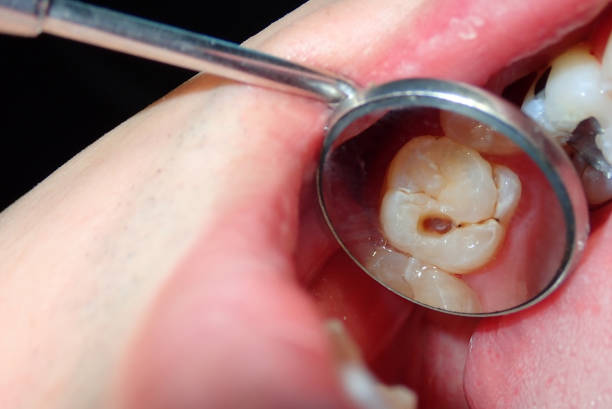
Yes, a large old dental filling can sometimes be replaced with a custom dental onlay when the filling needs replacement and enough suitable tooth structure remains. At The Woodlands Dental Group in The Woodlands, TX, we evaluate the tooth before recommending an onlay, another filling, or a full dental crown.
An onlay replaces damaged tooth structure and covers one or more cusps, the raised portions of a back tooth’s chewing surface. It may be useful when those areas need protection but full coverage is unnecessary. The size of the old filling matters, along with recurrent decay, cracks, remaining enamel and dentin, and the forces placed on the tooth.
Understanding when dental inlays and onlays are recommended can help you follow the discussion. This article takes a closer look at what happens when an existing filling is involved, including when repair or monitoring may be enough. If you have been wondering whether to replace an old filling, the starting point is its condition and the health of the surrounding tooth.
Why Do Large Old Dental Fillings Sometimes Need Replacement?
A filling may need replacement because it or the surrounding tooth has developed a problem. Age provides useful history, but it does not establish that a restoration has failed. Some older fillings remain functional, while a newer filling can require attention if it fractures or the tooth develops decay.
Your dentist looks for a clinical reason to intervene and considers how much treatment is necessary. An examination may lead to monitoring, a localized repair, or complete replacement, depending on the findings.
Wear and Deterioration Around an Existing Filling
Chewing surfaces and restoration edges can change with use. A dentist may find wear, a chipped edge, or a defect where the filling meets the tooth. That junction is called the margin. Changes in the contact between neighboring teeth may also affect how easily the area stays clean.
Not every visible line or stained margin requires replacement. The dentist considers whether there is decay, a fracture, an unacceptable gap, or another problem affecting the restored tooth. A small irregularity may be monitored or treated locally instead of removing the entire filling.
If the reason for replacement is unclear, ask your dentist to identify the finding. A photograph or explanation of the affected area can make the recommendation easier to understand.
Cracks in the Filling or Surrounding Tooth
A crack in filling material and a crack in the natural tooth are different findings. A fractured restoration may need repair or replacement, while a tooth crack requires an assessment of the tooth’s structure and inner tissues.
Repeated chewing forces, especially with clenching or grinding, can contribute to damage. However, the presence of a large filling does not tell the dentist how far a crack extends or whether it affects the pulp inside the tooth.
The treatment must address the structure that is actually damaged. Simply replacing the filling may be insufficient when a surrounding cusp also needs coverage or a deeper crack changes the tooth’s outlook.
Recurrent Decay Around or Beneath a Filling
Recurrent decay is new decay affecting the natural tooth next to an existing restoration. It may occur around a margin and extend beneath part of the filling. The restorative material itself does not develop a cavity.
Your dentist evaluates the area clinically and may use X-rays when appropriate. A dark line does not, by itself, prove that decay is present. Conversely, the visible surface does not always reveal the full extent of a problem.
Treatment depends on how much tooth is affected and whether the remaining restoration can be retained. A localized defect and widespread decay beneath a large filling may lead to very different plans.
When a Large Filling Leaves Tooth Cusps Vulnerable
A large filling can occupy much of a tooth’s center while leaving thinner natural walls around it. The dentist evaluates whether those walls and cusps have enough support to function without additional coverage.
A cusp that is weakened, undermined, or fractured may need to be included in the new restoration. An onlay can cover selected cusps as part of the repair, rather than only replacing the filling inside the tooth.
This assessment is individual. A filling’s apparent size does not automatically mean every cusp is vulnerable, and some teeth need more extensive protection than an onlay can provide.
Can a Dental Onlay Replace a Large Silver or Tooth-Colored Filling?
Yes, an onlay can replace either an amalgam or composite filling in selected cases. The suitability depends on the condition of the tooth and the proposed restoration, rather than the color or name of the old material.
An important first question is whether replacement is needed at all. Once a clinical problem is identified, your dentist can compare the reasonable ways to address it.
Replacing a Large Silver Amalgam Filling With an Onlay
A silver-colored amalgam filling may need replacement when it fractures, has poor integrity, or is associated with recurrent decay or tooth damage. If the surrounding tooth is suitable and cusps require coverage, an onlay may be one option.
Intact amalgam fillings do not need removal solely because they contain mercury. Removing a sound filling can sacrifice healthy tooth structure and temporarily increase mercury vapor exposure during the procedure. Concerns about a known material allergy or another medical issue should be discussed with your dentist and, when appropriate, your physician.
If you are concerned about an old silver filling, you can have it evaluated without committing to replacement. Your dentist should explain the findings and the benefits and risks of intervening.
Replacing a Large Composite Filling With an Onlay
Composite fillings are tooth-colored restorations placed directly into the prepared tooth. Like other restorations, they can develop fractures, wear, or marginal problems that warrant attention.
Another direct filling may be appropriate if the remaining tooth can support it and the area can be restored predictably. An indirect onlay may be considered when the repair also needs to cover compromised cusps or address a defect better suited to that design.
If replacement is needed, tooth-colored dental fillings can be part of the options discussion. The right choice depends on the tooth’s current condition rather than assuming that composite must always be replaced with a different type of restoration.
When an Existing Filling Can Be Repaired Instead
A localized defect may sometimes be repaired while the sound portion of the filling remains. For example, a limited chipped area may be treatable without removing the entire restoration, provided the remaining tooth and material are suitable.
Repair planning includes checking for decay, understanding why the defect occurred, and deciding whether a dependable repair is possible. Broad deterioration or an extensive fracture may make complete replacement more appropriate.
Preserving sound tooth structure is a meaningful reason to consider repair. If only one small area is affected, it is reasonable to ask whether local treatment can address it and how the repaired tooth will be monitored.
How Dentists Decide Whether an Onlay Can Restore a Tooth With a Large Filling
The decision involves the tooth as a whole. Your dentist evaluates the natural structure, the old restoration, the pulp, and the way the tooth functions. Your cavity risk and ability to maintain the restored area also belong in the treatment plan.
Some findings are available at the first examination. Others become clearer after old material is removed. A thoughtful plan explains both the initial recommendation and the circumstances that could require a change.
How Much Healthy Tooth Structure Remains?
Enamel forms the hard outer layer of the tooth, while dentin lies beneath it. Both the amount and the arrangement of these tissues matter when a large filling is being replaced. A tooth with supported walls presents a different restorative situation from one with thin or fractured walls.
The dentist considers which surfaces remain, their condition, and whether they can support and retain the proposed onlay. The restoration also needs enough space for its selected material, and the attachment technique must be appropriate for the available tooth surfaces.
There is no universal percentage of remaining tooth that guarantees an onlay will work. A single number would overlook the location of the missing structure, the distribution of the remaining walls, and the presence of cracks or decay.
Ask which parts of your tooth can be retained and which need rebuilding. That explanation connects the proposed treatment to the actual support available.
Are the Tooth Cusps Strong Enough to Remain Uncovered?
Cusps are the raised chewing portions of premolars and molars. When a large filling is present, your dentist evaluates each relevant cusp to determine whether it can remain uncovered or should be protected as part of the restoration.
Some cusps may remain well supported while another is fractured or undermined. An onlay can be designed to include the compromised area while leaving suitable surfaces uncovered. The coverage should follow the damage and the tooth’s functional needs.
A restoration that only occupies the space between the cusps is an inlay. If a cusp needs coverage, replacing the central filling alone may not address that need. The planned outline of the restoration helps explain why an onlay, rather than an inlay or conventional filling, is under consideration.
Is There Decay Beneath the Existing Filling?
An examination and appropriate imaging can help identify recurrent decay, but they do not always show every affected surface beneath an old restoration. The condition of the underlying tooth may become clearer during removal and preparation.
Additional decay can change the size and shape of the area needing repair. It may also leave less support than expected or bring the preparation closer to the pulp. Your dentist reassesses those findings before finalizing the restoration.
This uncertainty does not mean the initial recommendation was made carelessly. Existing material can limit what is visible. Before treatment, ask how unexpected decay would affect the plan and how the team would discuss a change with you.
The final decision should reflect the tooth that remains after the problem has been evaluated, rather than a commitment to an onlay regardless of new findings.
Does the Tooth Have a Crack or Fracture?
The location, depth, and extent of a crack can determine whether partial coverage is appropriate. A damaged cusp is a different situation from a crack extending into the pulp or root.
Your dentist may combine the visual examination with bite testing, assessment of the gums, and other diagnostic findings. X-rays can provide useful information, but a crack may not be directly visible on a routine image. Sometimes specialist evaluation is helpful.
Selected teeth with fractured cusps may be restored with an onlay. Other crack patterns may require a crown, root canal treatment, or a different approach. A severe fracture may make the tooth unrestorable.
Treating a cracked tooth with a dental crown may provide broader coverage when indicated, but no restoration makes a crack heal like a broken bone. The dentist should discuss the expected outlook and the limits of treatment.
How Do Chewing and Grinding Forces Affect the Decision?
Molars and premolars experience repeated chewing forces. The dentist assesses where the opposing teeth contact the tooth, how those contacts relate to the proposed restoration, and whether excessive loading may be a concern.
These contacts are sometimes called occlusal contacts. Their location matters because a restoration must function within your bite, with adequate material and tooth support in the areas receiving force.
Clenching and grinding add another consideration. Tell your dentist if you have a history of either, notice jaw soreness on waking, or have previously broken restorations. The examination may also show wear or other signs of loading you have not noticed.
An onlay is not automatically ruled out by grinding, but the findings may influence coverage, material selection, and protective recommendations. A nightguard may be considered where appropriate; it does not guarantee that the tooth or restoration will never be damaged.
Is the Tooth’s Nerve Healthy?
The term “nerve” is often used to describe the pulp, which contains nerves, blood vessels, and connective tissue inside the tooth. Deep decay, fractures, or repeated treatment can affect this tissue.
Your dentist asks about symptoms and may assess the tooth’s response to temperature or other tests alongside examination and imaging findings. Sensitivity alone does not establish a diagnosis, and the absence of pain does not confirm that the pulp is healthy.
If the pulp is infected or irreversibly inflamed, an onlay alone will not resolve the underlying problem. Root canal treatment or other appropriate care may be necessary before a definitive restoration is placed.
A tooth that needs endodontic treatment also needs a plan for its remaining structure afterward. The final restoration may be an onlay, a crown, or another suitable design, depending on the tooth and the clinical findings.
Dental Onlay vs. Another Large Filling: Which Is Better for a Weakened Tooth?
An onlay may be more suitable when the tooth needs cusp coverage, while a direct filling may adequately restore a supported defect. The choice depends on what the restoration must accomplish.
The question is not simply which material is strongest. Your dentist needs to consider the natural tooth, the extent of the repair, and how the completed restoration will function.
When Another Direct Filling May Be Appropriate
Another direct filling may be appropriate when enough sound tooth remains and the defect can be restored predictably. The dentist must be able to access the area, control moisture as required, and recreate suitable contours and contacts.
Direct composite is shaped and hardened in the mouth, allowing it to restore a defect without separate fabrication. This can be a useful option when the remaining cusps and walls do not require the proposed indirect coverage.
A large filling does not automatically rule out another filling. The recommendation should explain why a direct restoration is adequate for this tooth or which structural concern makes it less suitable.
When an Onlay May Provide Needed Cusp Coverage
An onlay may be useful when a cusp is missing, fractured, or insufficiently supported. Its design can replace the central defect and extend over selected cusps that need protection.
That coverage addresses a different need from simply filling an opening. The dentist assesses the support beneath the covered area and the contact it will make with the opposing tooth.
The onlay must still be appropriate for the remaining structure. If damage is too extensive or the proposed attachment cannot be achieved predictably, another treatment may offer a more suitable restoration.
Why Bigger Does Not Automatically Mean Better
A more extensive restoration is not automatically a better repair. Treatment should address the defect and provide appropriate protection while avoiding unnecessary removal of healthy tooth.
Equally, choosing the smallest possible repair is not helpful if it leaves a compromised cusp unprotected. Preserving tooth structure includes considering how the tooth will function after treatment.
You can ask your dentist to explain the balance in your case: what needs replacing, which areas need coverage, and why the proposed design provides enough support. The explanation should be specific to the findings.
Why Restoration Design Matters More Than Simply Choosing a Material
Ceramic, composite, and metal restorations have different properties, but material selection cannot compensate for an unsuitable design. Preparation shape, remaining support, attachment technique, and bite conditions all contribute to planning.
An indirect restoration also needs sufficient thickness for its material and a fit appropriate to the prepared tooth. Bonding or cementation is selected according to the material and clinical situation.
Rather than asking only whether porcelain is stronger than a filling, ask why the proposed combination of design and material suits your tooth. That discussion gives a more useful picture of the expected benefits and limitations.
Dental Onlay vs. Crown: Does a Large Old Filling Always Need Full Coverage?
No, a tooth with a large old filling does not always need a full crown. Some teeth can receive an onlay or another filling, while others need broader coverage because of the damage and remaining support.
Your dentist compares these options after evaluating the tooth. A large filling is one part of the history, rather than a diagnosis that dictates the same restoration for everyone.
When an Onlay May Preserve More Remaining Tooth Structure
An onlay covers the areas included in its design while leaving suitable portions of the tooth uncovered. For selected teeth, this can avoid preparing surfaces that would otherwise be involved in a full crown.
The amount preserved depends on the existing damage and the requirements of the new restoration. An onlay still requires preparation and adequate space; it is not guaranteed to remove less tooth than every possible alternative.
Partial coverage is useful when it provides the repair and protection the tooth needs. Your dentist can identify the sound areas that may remain and explain how they support the proposed restoration.
When a Dental Crown May Offer a More Suitable Restoration
A crown may be more suitable when structural loss is extensive, several cusps are compromised, or certain fracture patterns require broader protection. Insufficient support for partial coverage can also change the recommendation.
The number of cusps involved is considered alongside the rest of the tooth. Multiple affected cusps do not create a universal rule, but they may be part of a pattern that favors a crown.
When discussing dental crowns in The Woodlands, ask how the additional coverage addresses your tooth’s condition. A crown can be an appropriate way to preserve a natural tooth when a more limited restoration would not provide adequate protection.
Can a Tooth With a Root Canal Receive an Onlay?
Selected root-canal-treated teeth can receive onlays or other partial-coverage restorations. Suitability depends on tooth type, the amount and arrangement of remaining structure, and the support needed for function.
Other teeth need full crowns. Root canal treatment addresses disease inside the tooth, while the final restoration must address the structural condition of the remaining tooth. Both parts of the plan matter.
There is no single rule that makes every root-canal-treated tooth an onlay candidate or requires the same crown design. Your dentist should explain how the chosen restoration protects the particular tooth after treatment.
Why Dentists Do Not Choose an Onlay Based on Appearance Alone
A tooth-colored restoration may appeal to you if a large metal filling is visible. That preference can be part of treatment planning, but the restoration must also meet the tooth’s functional needs.
The dentist evaluates support, coverage, fit, and the expected outlook before recommending a design. A natural-looking material does not make an unsuitable tooth a dependable onlay candidate.
If replacement is clinically indicated, discuss shade and appearance alongside those structural considerations. If the filling is healthy, discuss the risks and tradeoffs before considering elective changes.
What Happens When a Large Old Filling Is Replaced With a Dental Onlay?
The process includes assessing the existing restoration, removing material as needed, preparing the tooth, and fitting a custom onlay. The exact sequence and number of visits depend on the fabrication method and whether other treatment is necessary.
Local anesthetic is commonly used when needed for preparation. Share concerns about sensitivity, dental anxiety, or previous difficulty getting numb before treatment so your dentist can discuss a plan for your comfort.
Step 1 — Examining the Existing Filling and Tooth
Your dentist examines the filling, surrounding tooth, gums, and bite. Appropriate imaging may help assess decay, the underlying tooth, and nearby tissues. Symptoms and previous treatment history also inform the evaluation.
This is the time to explain what you have noticed, such as food trapping, a rough edge, or pain on chewing. Bring up any existing nightguard and whether it still fits comfortably.
Before proceeding, discuss the expected appointments and treatment estimate. Ask what findings could change the proposed onlay plan once the old restoration is removed.
Step 2 — Removing the Old Filling and Evaluating the Tooth Underneath
The dentist removes the existing restoration as needed to address the problem and prepare for the new design. The exposed tooth is evaluated for decay, fractures, and the support available for restoration.
Additional damage may become apparent beneath the old material. If that damage changes the tooth’s suitability for an onlay, the dentist reassesses the plan and explains the alternatives.
The old filling’s outline does not have to become the exact outline of the new restoration. The new design follows the tooth’s current condition, including areas that need coverage beyond the original filling.
Step 3 — Preparing the Tooth for the New Onlay
Preparation addresses compromised tissue and creates an appropriate shape for the onlay. The dentist aims to preserve suitable sound structure while allowing enough space for the restoration’s material and intended coverage.
The approach to deep decay is individualized. Conservative decay-removal techniques may be appropriate in selected cases to help protect the pulp, while the margins and overall preparation still need to support the planned restoration.
If pulp disease or another significant problem is identified, additional care may be needed before the final onlay. Completing the restoration should follow a suitable diagnosis and treatment plan.
Step 4 — Creating the Custom Onlay
An impression or digital scan records the prepared tooth. Information about neighboring teeth and the opposing bite helps guide fabrication. A shade is selected when a tooth-colored material is used.
The onlay is made separately from the tooth rather than built entirely inside the mouth like a direct filling. Fabrication may involve a dental laboratory or another workflow, depending on the case and practice.
Do not assume that a scan means same-day completion. If another visit is needed, a temporary restoration may protect the prepared area. Follow the instructions for eating and cleaning, and contact the office if the temporary loosens or breaks.
Step 5 — Fitting, Bonding or Cementing, and Checking the Bite
Before final placement, the dentist checks how the onlay seats and how its edges meet the tooth. Contacts with adjacent teeth and the opposing bite are also assessed. Adjustments may be necessary to achieve an appropriate fit.
The restoration is bonded or cemented using a technique suitable for its material and the clinical situation. Your dentist then completes the necessary finishing and checks the bite again.
You will receive instructions for eating and home care. Temporary sensitivity can occur, but persistent or increasing pain, a high bite, or a loose restoration should be assessed. Let the team know if the tooth does not feel right after treatment.
What Are the Benefits of Replacing a Large Filling With an Onlay?
For a suitable tooth, an onlay can address structural needs that become apparent when a large filling requires replacement. The benefits depend on the defect, restoration design, and condition of the tooth.
Our porcelain onlays are one restorative option to discuss when a large filling needs replacement. An examination is necessary to determine whether this treatment fits your situation and how it compares with other reasonable options.
Restoring Weakened Tooth Cusps
An onlay can rebuild a missing cusp or cover a compromised one as part of the repair. This allows the restoration to address damage to the raised chewing surface as well as the space previously occupied by the filling.
The coverage is designed around the tooth’s support and bite. Its purpose is to provide an appropriate functional repair, without promising that the tooth can never fracture again.
Preserving Appropriate Healthy Tooth Structure
Partial coverage can leave suitable natural surfaces outside the restoration. This may be useful when the damage can be addressed without preparing the tooth for a full crown.
Preservation must be balanced with adequate protection. Your dentist considers whether the retained areas can remain supported and functional, rather than preserving an area at the expense of a dependable restoration.
Rebuilding Natural Chewing-Surface Anatomy
The onlay can recreate missing cusps, grooves, and slopes needed for the restored chewing surface. Where the defect includes the side of the tooth, the design also addresses contact with the neighboring tooth.
These details matter to comfortable function and cleaning. The finished restoration should be evaluated if the bite feels uneven or food repeatedly catches beside it.
Improving the Appearance of a Visible Old Filling
Ceramic and selected indirect composite materials provide tooth-colored onlay options. Shade and contours can help a replacement blend with the surrounding tooth when restorative treatment is appropriate.
Appearance is a valid concern to discuss, especially for a tooth visible when you smile. It should be weighed alongside the condition of the existing filling and the potential risks of removing sound material.
Creating a Custom Restoration for a Larger Defect
Indirect fabrication allows an onlay to be designed for the prepared tooth before it is attached. The dentist checks its fit, contacts, and contours as a separate piece during placement.
This process may suit a larger defect requiring cusp coverage. It also involves custom fabrication and potentially additional appointments and cost, so an onlay is not automatically superior to an appropriate direct restoration.
When Is Replacing an Old Filling With an Onlay Not Recommended?
An onlay is unnecessary for some fillings and unsuitable for some teeth. The recommendation should reflect a clinical need and a reasonable expectation that the proposed restoration can serve the tooth.
Your dentist can help distinguish between a filling that needs observation, one that needs local care, and a tooth requiring a more extensive plan.
When the Existing Filling Is Still Healthy and Functional
A sound filling with no identified clinical problem may be best left in place and monitored. Its age or silver color alone does not mean it should be removed.
Replacement can involve removing additional natural structure, so it should have a clear purpose. If your concern is mainly appearance, discuss the benefits, risks, and alternatives before deciding on elective treatment.
When a Small Repair or Replacement Filling Is Enough
A limited defect may be repairable, or a new direct filling may adequately restore the tooth. These options deserve consideration when the surrounding structure remains suitable and cusp coverage is unnecessary.
The dentist evaluates the extent of the problem and whether the remaining material can be retained. Choosing a smaller intervention can be appropriate when it fully addresses the clinical need.
When the Tooth Is Too Severely Damaged for an Onlay
Extensive structural loss or certain fractures may require a crown or another approach. If the remaining tooth cannot support partial coverage, an onlay may not provide an appropriate repair.
Some teeth cannot be predictably restored at all. A severe root fracture or inadequate supporting tissues may lead to a discussion of extraction and replacement options after evaluation.
When Deep Decay or Infection Requires Additional Treatment
Replacing a filling does not by itself treat infection or irreversible inflammation inside the tooth. Root canal treatment or other appropriate intervention may be needed before the final restoration.
The dentist assesses whether the tooth can be retained and how it should be restored afterward. An onlay may remain an option in selected cases, but the plan must address the underlying disease first.
What Symptoms Should Prompt an Evaluation of an Old Dental Filling?
New symptoms or a change in the restoration are reasons to contact your dentist. They do not establish which treatment you need, and a tooth can also develop problems before noticeable pain occurs.
Describe what changed, when it started, and what triggers it. Those details help guide the examination without requiring you to diagnose the cause yourself.
Pain When Biting or Releasing Pressure
Pain during biting or when pressure is released can occur with cracks, a loose filling, decay, or other dental problems. The pattern helps the dentist investigate, but it does not identify one cause with certainty.
Arrange an evaluation rather than repeatedly testing the tooth by biting on hard objects. A tooth that is painful or structurally damaged deserves assessment before further loading makes the problem more difficult to manage.
New Sensitivity to Hot, Cold, or Sweet Foods
New sensitivity can be associated with decay, exposed tooth structure, a loose restoration, or irritation of the pulp. The duration and intensity are useful details to report.
Sensitivity that lingers after the trigger is removed deserves particular attention. Your dentist may need additional tests to distinguish a manageable surface problem from disease affecting the pulp.
A Broken, Loose, or Missing Portion of the Filling
A broken or loose filling can leave the tooth exposed or change how it functions. Contact your dentist promptly, even if the tooth is not painful.
The examination determines whether the damage is limited to the restoration or includes natural tooth structure. Until you receive instructions, avoid chewing hard foods on the affected side and keep the area gently clean.
Food Frequently Getting Trapped Around the Filling
Repeated food trapping may reflect a changed contact, a contour problem, a marginal defect, or another issue involving the tooth or gums. Persistent trapping is worth mentioning rather than assuming that it is normal for an older filling.
The dentist checks the space between the teeth and the restoration’s shape. The appropriate response might be local correction, repair, replacement, or other care depending on the cause.
Visible Cracks or Changes Around the Restoration
A visible line, missing piece, rough area, or color change may justify an examination, but appearance alone cannot establish the extent of damage. Some superficial enamel lines are harmless, while deeper problems may be difficult to see.
Report the change and any accompanying symptoms. Severe or spreading facial swelling, fever with dental symptoms, or significant uncontrolled pain warrants urgent assessment. Difficulty breathing or swallowing requires emergency medical care; call 911 or go to the nearest emergency department.
How Long Can a Dental Onlay Last After Replacing an Old Filling?
An onlay can serve for many years, but no fixed lifespan applies to every restoration. The tooth’s starting condition, the restoration design and material, and what happens after placement all affect its outlook.
Replacing an old filling does not reset the tooth to an untouched state. The dentist must work with the structure that remains, and the restored tooth continues to need preventive care and monitoring.
Remaining Tooth Structure and Restoration Design
The onlay depends on suitable support from the underlying tooth. The size and location of the defect, coverage of compromised cusps, and fit of the restoration all matter.
Future problems can involve the onlay, the tooth, or both. If damage occurs, the dentist assesses whether repair, replacement, or a different approach is appropriate rather than assuming the same treatment will always be repeated.
Bite Forces and Teeth Grinding
Repeated clenching, grinding, and chewing hard objects can place stress on restored teeth. Tell your dentist about changes in your bite or signs of grinding, especially if you have previously fractured dental work.
A protective appliance may be recommended for your circumstances. Use it as instructed and have it checked if it no longer fits after treatment; a previously made guard may need assessment once the tooth’s shape changes.
Oral Hygiene and Recurrent Decay Prevention
The natural tooth around an onlay can still develop decay. Brush twice daily with fluoride toothpaste and clean between teeth daily with floss or another suitable interdental cleaner.
Your dental team can help with areas that are difficult to reach. Discuss dry mouth and frequent sugary foods or drinks as well, since cavity prevention involves managing risk factors in addition to cleaning the restored surface.
Regular Dental Examinations and Monitoring
During routine dental examinations, your dentist can assess margins, wear, cracks, and the surrounding tooth. Imaging may be recommended when it provides useful additional information.
The follow-up schedule should suit your oral health and cavity risk. If a new symptom, fracture, or loose restoration develops between visits, contact the office rather than waiting for the next scheduled checkup.
Frequently Asked Questions About Replacing Old Fillings With Onlays
Can a large silver filling be replaced with a porcelain onlay?
Yes, a large silver filling can sometimes be replaced with a porcelain onlay. The surrounding tooth must have suitable remaining structure, and the restoration design must address any weakened cusps. First, the dentist determines whether the existing filling actually needs replacement.
Is an onlay stronger than a large filling?
An onlay may provide more appropriate protection for certain large defects, especially when cusp coverage is needed. It is not automatically stronger or longer-lasting in every tooth. Performance depends on the remaining structure, restoration design, material, attachment, and bite forces.
Does replacing a large filling always require a crown?
No, replacing a large filling does not always require a crown. A repair, another filling, or an onlay may be suitable depending on the findings. A crown may be recommended when the tooth needs more extensive coverage or lacks adequate support for partial coverage.
Can a cavity develop underneath an old filling?
Yes, decay can develop in the natural tooth around a filling’s margins and extend beneath it. The filling material itself does not develop cavities. Examination and appropriate imaging help the dentist evaluate the affected area and plan treatment.
Can a cracked tooth with a large filling receive an onlay?
Sometimes, if the crack or fracture and remaining tooth structure make partial coverage appropriate. A fractured cusp differs from a crack extending into the pulp or root. Deeper or more extensive damage may require a crown, root canal treatment, or another approach.
Is it painful to remove an old filling and place an onlay?
Local anesthetic is commonly used when needed to help keep preparation comfortable. Let your dentist know if you feel discomfort or have concerns about getting numb. Temporary sensitivity may occur afterward, but persistent or worsening pain should be evaluated.
Can an onlay be used on a back molar?
Yes, onlays can be used on selected molars and premolars with damaged chewing surfaces or cusps. The dentist evaluates the support available and the forces the tooth receives. Being a back tooth does not by itself establish that an onlay is the right restoration.
Should an old amalgam filling be replaced even if it is not damaged?
Not necessarily; a clinically sound amalgam filling may be left in place and monitored. Age or mercury content alone is not a reason to remove an intact filling. Discuss any specific medical or material-related concern with your dentist before deciding on replacement.
How do I know whether my tooth needs an onlay or crown?
A dental examination is needed to compare these options for your tooth. Your dentist assesses decay, cracks, remaining walls and cusps, pulp health, and bite forces. Ask which findings support the recommendation and whether a reasonable alternative exists.
Where can I have an old filling evaluated in The Woodlands, TX?
The Woodlands Dental Group can evaluate an existing filling and discuss appropriate restorative options. Our services include fillings, porcelain inlays and onlays, and crowns. An appointment can help establish whether monitoring, repair, replacement, or additional treatment is appropriate.
Have a Large or Aging Dental Filling Evaluated in The Woodlands, TX
An old dental filling does not automatically need replacement, but a new symptom or change in the tooth deserves attention. An evaluation can establish whether the filling remains functional, needs a small repair, or should be replaced with a restoration suited to the remaining tooth.
At The Woodlands Dental Group, we take time to explain the findings and help you understand your choices. Our approach to restorative dentistry in The Woodlands, TX considers your comfort and the support your tooth needs, whether the appropriate option is a filling, dental onlay, dental crown, or other care.
Schedule an appointment to have your filling checked and talk through the next step. With multiple dental services in one location and a team that can follow your care over time, you can make the decision with a clearer understanding of what your tooth needs.
